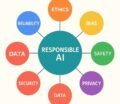


From Bias to Fairness: Navigating Ethical Challenges in AI-Powered Hiring
The rise of artificial intelligence (AI) in hiring processes has revolutionized recruitment, offering businesses an efficient and data-driven way to find the right candidates. However, with the increased reliance on AI to make hiring decisions comes a host of ethical challenges, particularly regarding bias and fairness. While AI has the potential to reduce human bias, it can also perpetuate or even amplify existing biases if not designed and implemented responsibly.
This blog post will explore the ethical concerns surrounding AI in hiring, from avoiding biases to ensuring fairness, and offer best practices for implementing AI hiring solutions responsibly.
The Promise of AI in Hiring
AI has the potential to streamline the hiring process in ways that traditional methods simply cannot. By automating repetitive tasks like resume screening, candidate matching, and interview scheduling, AI enables HR teams to focus on higher-value activities, such as candidate engagement and organizational fit.
Moreover, AI can help companies identify top talent based on data-driven insights, reducing human errors and subjectivity in decision-making. It can process vast amounts of data to find patterns and correlations that humans might overlook. AI-powered hiring tools can also speed up the recruitment process, making it more efficient and cost-effective.
However, the use of AI in hiring also raises critical ethical concerns, particularly related to bias and fairness. If not implemented thoughtfully, AI can exacerbate inequality, resulting in discriminatory hiring practices.
Understanding AI Bias in Hiring

AI systems are only as good as the data they are trained on. If the historical data used to train AI models reflects past biases, the AI system can perpetuate those biases in future hiring decisions. For example, if a hiring model is trained on historical hiring data from an industry that has predominantly hired male candidates, the AI could inadvertently favor male candidates over female candidates, even if the job is equally suited to both genders.
AI bias can manifest in several ways:
- Data Bias: If the training data is unbalanced, AI models may produce biased outcomes. For example, if the training data contains predominantly white or male candidates, the AI system may not be effective at identifying qualified candidates from other demographics.
- Algorithmic Bias: The design of the AI algorithm itself can introduce bias. If the algorithm’s features or decision rules inadvertently favor certain characteristics (e.g., educational background or geographic location), it may unfairly disadvantage candidates from diverse backgrounds.
- Feedback Loops: Over time, AI systems can develop feedback loops, where the biases present in initial hiring decisions are reinforced by new data. For example, if an AI system consistently selects candidates from a particular university or region, it may continue to favor those candidates, even if they are not the most qualified.
Ensuring Fairness in AI-Powered Hiring
To build a fair and ethical AI-powered hiring system, companies must take proactive steps to address biases and ensure that their hiring processes are equitable. Here are some best practices for implementing AI hiring solutions responsibly:
1. Diversify Training Data
One of the most important steps in reducing bias in AI is ensuring that the training data used to build the hiring algorithms is diverse and representative of the entire talent pool. This means using data that reflects the wide range of characteristics, experiences, and backgrounds that make up your workforce.
Companies should ensure that their AI systems are trained on data that includes diverse groups across gender, ethnicity, age, and other relevant factors. Data diversity helps AI systems recognize qualified candidates from all demographics, reducing the risk of biased outcomes.
2. Regularly Audit AI Models
AI models should not be “set and forget.” They need to be regularly audited and evaluated to ensure they continue to produce fair and unbiased results. Companies should use fairness metrics to assess whether their AI system is discriminating against any particular group. These audits can help detect unintended bias in the system, allowing companies to make adjustments and improve the fairness of their hiring processes.
3. Implement Explainable AI
One of the main criticisms of AI is the “black-box” nature of many AI algorithms. When AI systems make decisions, it can be difficult for humans to understand how those decisions were reached. In the context of hiring, this lack of transparency can lead to a lack of trust and accountability.
To address this, businesses should implement explainable AI (XAI), which refers to AI systems designed to provide transparent and understandable explanations of how decisions are made. For example, if an AI system eliminates a candidate from consideration, it should be able to explain why that decision was made, based on the data it analyzed. This can help build trust in AI-powered hiring decisions and ensure that candidates are treated fairly.
4. Foster Human-AI Collaboration
AI should be seen as a tool that enhances human decision-making, rather than replacing it entirely. HR professionals should work alongside AI systems, using the insights provided by AI to make more informed decisions. AI can help identify strong candidates and streamline the process, but human judgment is still necessary to evaluate cultural fit and assess factors that AI might not fully capture, such as interpersonal skills.
By fostering collaboration between humans and AI, companies can combine the efficiency and objectivity of AI with the empathy and intuition of human decision-makers, resulting in a fairer and more holistic hiring process.

Let’s build smarter, faster, together.
Book a free consult with ATLAS Global Ventures today →